SyntetiQ DaaS Platform: A Breakthrough in Data Management
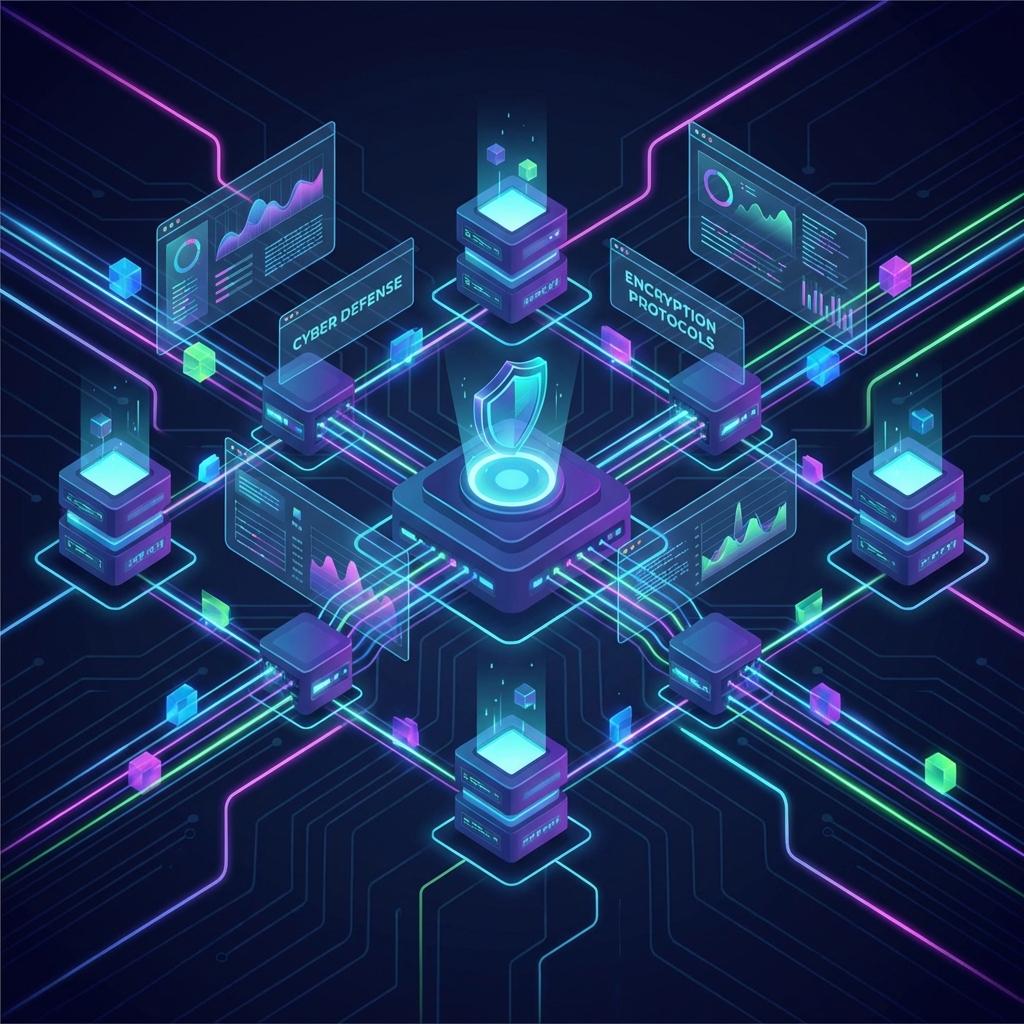
AI teams are rarely blocked by model ideas. They are blocked by the work around the model: acquiring the right data, producing consistent labels, managing versions, and iterating fast enough to keep pace with real-world change.
That is the gap SyntetiQ is built to close.
Our Data-as-a-Service (DaaS) platform is designed to help organisations generate, manage, and validate mission-specific training data and deployable skills—with strong emphasis on repeatability, governance, and measurable outcomes.
The real bottleneck: data operations, not algorithms
In physical AI—robotics, autonomy, inspection, and infrastructure—data challenges are amplified:
- Real-world collection is slow and expensive. Site visits, sensor setups, and repeat runs take time.
- Edge cases are scarce. The scenarios you most need are usually rare or unsafe to capture.
- Labelling is labour-intensive and inconsistent. Human annotation introduces variance and delay.
- Versioning is weak. Teams struggle to track what dataset and configuration produced which result.
- Acceptance criteria are unclear. “It works” is not the same as “it is deployable.”
A DaaS platform only matters if it improves these realities—not by storing files, but by accelerating the full cycle from scenario definition to validated deployment.
Positioned at the intersection of digital twins and synthetic data
SyntetiQ sits where digital twins, synthetic data, and deployment discipline meet.
A useful digital twin is not a marketing render. It is a trainable environment that enables:
- controlled scenario variation,
- repeatable benchmarking,
- evidence generation for acceptance testing.
Synthetic data becomes valuable when it is produced with a purpose:
- aligned to a task definition,
- generated across a scenario suite,
- labelled consistently,
- measured against a benchmark protocol.
That is why we treat “data generation” and “benchmarking” as one pipeline rather than separate phases.
Key capabilities of the SyntetiQ DaaS platform
1) Accelerated synthetic data generation (scenario-first)
Instead of starting with “how much data”, we start with:
- what the robot must do
- what can go wrong
- what must never happen (constraints)
From there, the platform generates scenario coverage:
- environmental variation (lighting, clutter, geometry drift)
- sensor variation (noise, blur, occlusion)
- edge cases (rare events and failure modes)
The aim is to reduce time-to-iteration: fewer delays waiting for physical collection.
2) Dataset management designed for iteration
Most ML pipelines break down because teams cannot reproduce results reliably.
A practical DaaS layer needs:
- dataset versioning and lineage (what changed and why)
- consistent metadata standards
- repeatable export formats for downstream training
- auditability for pilot and enterprise stakeholders
In short: it should make results repeatable, not just stored.
3) Ground truth and annotation efficiency
Synthetic pipelines can generate consistent labels automatically:
- segmentation, depth, bounding boxes
- pose and geometry metadata
- scenario parameters used for reproducibility
This reduces the manual labelling burden and eliminates a major source of inconsistency.
4) Benchmarking and evidence logs (the “trust layer”)
Data only matters if you can prove what it achieved.
Our approach ties datasets to:
- benchmark protocols (performance, robustness, safety envelope)
- evidence logs (traceable test outputs and thresholds)
- repeatable scenario suites for acceptance testing
This is how pilots become scalable deployments: the organisation can see what was tested and why.
5) Privacy-first and governance-ready by design
In many environments—especially those touching critical infrastructure, regulated data, or sensitive operations—data governance is not optional.
A DaaS platform should support:
- data minimisation (collect only what is necessary)
- access controls and least privilege
- retention by agreement
- secure handling workflows appropriate to the customer’s requirements
Synthetic data can reduce exposure risk, but governance still matters.
Who this is for (and where it fits best)
SyntetiQ is built for teams working in high-constraint, real-world environments:
- industrial manipulation (warehouse and material handling)
- inspection & maintenance (utilities, facilities, infrastructure)
- hazardous environments (post-event assessment, remote operations)
- selected aerospace and autonomy applications where scenario coverage is the limiting factor
If your model fails because the environment changes, or because you cannot generate the right edge cases quickly, the DaaS workflow becomes a force multiplier.
Join our invite-only beta programme
The best DaaS platforms are shaped by real use cases, not demos.
Beta participants receive:
- priority access to the platform workflow,
- close feedback loops with the engineering team,
- early input into export formats, benchmarks, and integration patterns.
If you want to explore a pilot or beta access, the most helpful starting point is a short description of your task, robot stack, constraints, and what success looks like. From there, we can propose a scenario suite and measurable acceptance plan.
The future of Physical AI will belong to teams who can iterate faster, validate more rigorously, and deploy more safely. Data operations is where that advantage is built.