Physical AI: Overcoming the Real-World Data Barrier
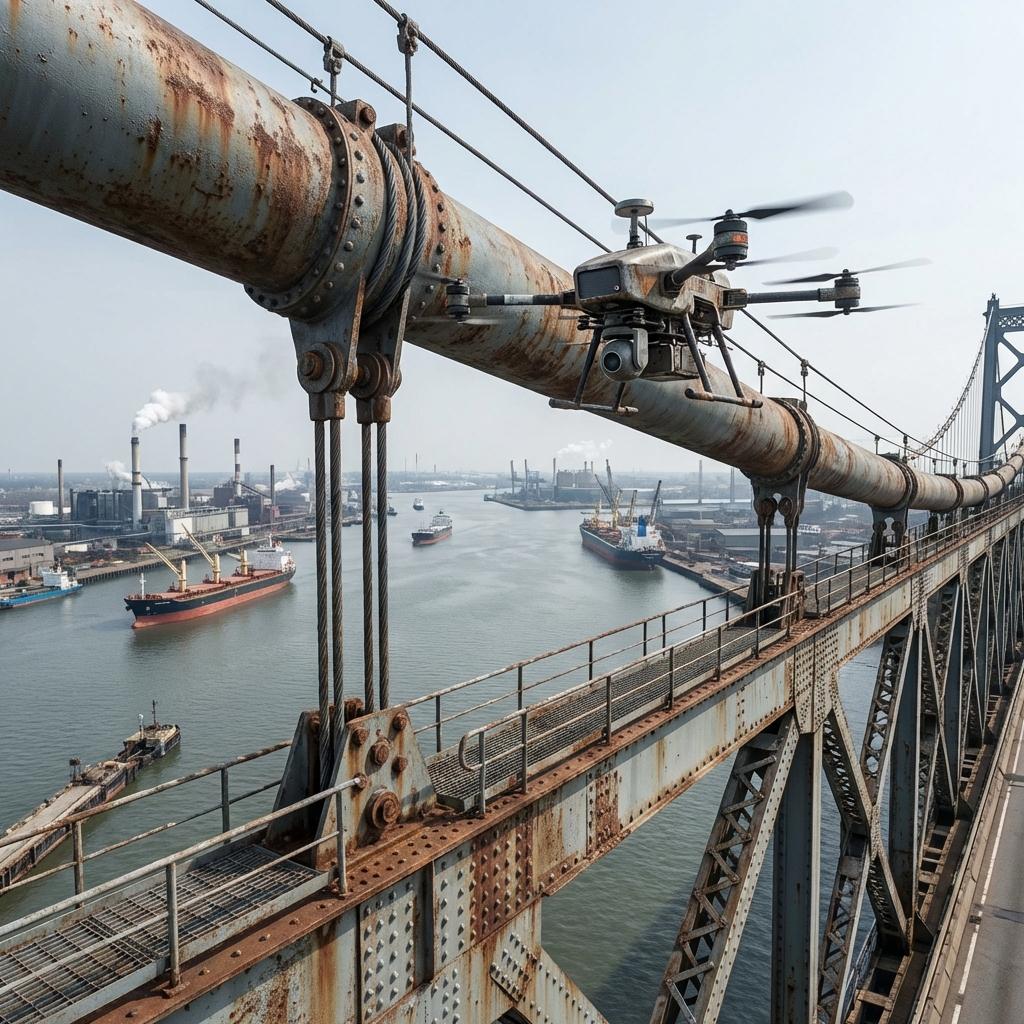
While internet-trained models excel at language, images, and virtual benchmarks, Physical AI plays a different game. Robots and autonomous systems must operate under constraints that the internet rarely captures: site-specific geometry, safety envelopes, sensor noise, occlusions, rare hazards, and operational downtime.
This is the core barrier: real-world data is expensive, slow, and risky to collect — yet physical systems need it the most.
The data challenge in Physical AI
Real environments don’t repeat
Two facilities can look “similar” on paper and behave completely differently in practice:
- lighting and reflections change across shifts;
- materials, dust, and clutter patterns evolve;
- layouts drift over time;
- humans introduce unpredictable dynamics.
A dataset that works in one site often fails quietly in another — and that failure is operationally costly.
Edge cases are the cases that matter
In physical deployments, the most important events are usually the rare ones:
- near-misses;
- partial occlusions;
- unexpected objects;
- sensor dropouts;
- unusual conditions (rain, glare, vibration, motion blur).
These are difficult to capture intentionally, and often unsafe to collect at scale.
Manual labelling doesn’t scale
Even when you can collect real data, annotation can become the bottleneck:
- slow turnaround;
- inconsistent labels across teams;
- long feedback loops between operations and ML.
In Physical AI, time to iteration often matters more than model sophistication.
Why synthetic data is not the goal (but it is the lever)
Synthetic data is frequently marketed as a replacement for real data. In practice, the stronger framing is this:
Synthetic data is the fastest way to generate “synthetic experience” — scenario coverage that would be expensive, slow, or unsafe to obtain in the real world.
Done properly, it enables:
- controlled variation (lighting, weather, geometry drift);
- edge-case generation on demand;
- repeatable benchmarking across defined suites;
- automated labels consistent with the simulation ground truth.
The benefit is not just more data. It is better iteration.
A more flexible, reliable approach
1) Rapid iteration without waiting for physical collection
Instead of “collect → label → train → discover gaps”, you can:
- define the task and acceptance criteria;
- generate scenario variants in simulation;
- train and test in parallel;
- identify failure modes early;
- adjust the scenario suite and retrain.
This compresses the cycle from weeks/months to days — especially in early pilots.
2) Scalability through edge-case coverage
A well-designed scenario suite can include:
- rare occlusions;
- long-range thin obstacles;
- high dynamic range lighting;
- reflective and low-texture surfaces;
- motion blur and vibration profiles.
This is how you move from “works in a demo” to “works in production conditions”.
3) Easier annotation via ground truth
Simulation provides labels automatically:
- segmentation masks;
- depth maps;
- bounding boxes;
- pose/orientation;
- per-pixel metadata.
That dramatically reduces cost and eliminates a large source of human label variance.
The missing piece: benchmarking and transferability
Synthetic data only becomes operationally valuable when it is tied to a measurable transfer strategy:
- what scenarios are covered (and why);
- what metrics define success (and what thresholds);
- how robustness is tested under domain shifts;
- what constitutes “safe enough” under constraints;
- what happens when performance degrades (monitoring + rollback).
In other words, Physical AI needs acceptance testing the same way physical engineering does.
How SyntetiQ helps teams “step out of the internet”
SyntetiQ exists to help organisations deploy site-specific robot skills faster and with less risk.
We combine:
- trainable digital twins from limited site inputs,
- synthetic experience for scenario coverage,
- benchmark protocols and evidence logs,
- deployment packs with monitoring and rollback.
The outcome is not a dataset. It is a deployable Skill Pack backed by measurable evidence.
What to do next
If you are evaluating Physical AI in robotics, inspection, or industrial automation, the fastest way to break the data barrier is to start with a pilot that is:
- tightly scoped around a real task,
- defined by measurable KPIs,
- validated through a repeatable benchmark suite,
- shipped with monitoring and rollback.
The organisations that win in Physical AI won’t just train models. They will build repeatable pathways from data to deployment — safely.
If you want to explore a pilot, start with a simple site input checklist and a clear definition of “done”.