AI-Powered Satellite Image Analysis
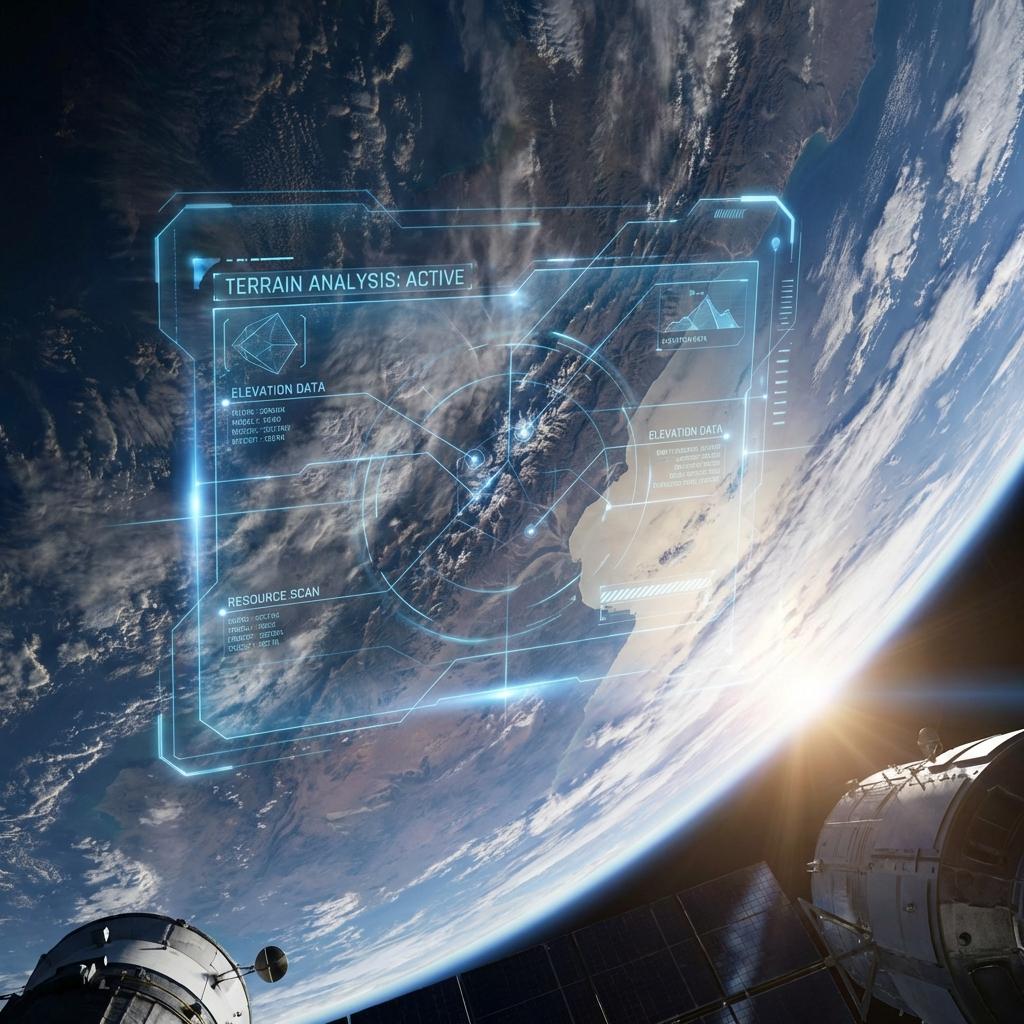
Satellite imagery is transforming Earth observation—supporting everything from disaster response to infrastructure monitoring. The challenge is no longer access to images. It is turning massive data volumes into fast, reliable decisions.
That is exactly where AI delivers value: automating interpretation at scale and enabling analysts and operators to move from “what happened?” to “what should we do next?”—with measurable confidence.
Why AI matters in satellite imagery
Modern Earth observation generates enormous streams of data across diverse sensors (optical, SAR, thermal, hyperspectral). Human analysis alone cannot keep up, especially when the requirement is near real-time detection.
AI helps by enabling:
- Automated feature detection (objects, boundaries, patterns)
- Change detection across time series
- Classification and segmentation for land use, water, vegetation, and built environments
- Anomaly detection for rare events and unexpected patterns
But there is a catch: performance is limited by data quality and coverage—particularly for rare events and “long-tail” conditions.
Core applications of AI-powered satellite analysis
1) Automated feature detection
AI models can identify and quantify objects and structures such as:
- buildings and road networks
- ports and shipping patterns
- deforestation boundaries and land-use change
- water bodies and coastlines
The operational advantage is speed: consistent outputs across wide areas, without manual interpretation for every scene.
2) Change monitoring and time-series intelligence
Satellite imagery becomes far more valuable when analysed as a time series. AI supports:
- early detection of gradual change (land use, urban growth)
- rapid detection of sudden events (floods, landslides, fires)
- trend signals (vegetation stress, shoreline movement)
For organisations managing infrastructure, environmental risk, or supply chains, this can materially reduce response time.
3) Climate and environmental analytics
AI models can support monitoring of:
- coastal and marine pollution signals
- surface water dynamics and drought indicators
- land cover and habitat change
- thermal anomalies and heat stress (sensor dependent)
Where traditional pipelines struggle is consistency across seasons, sensors, and atmospheric conditions.
4) Precision agriculture
AI applied to EO can assist with:
- crop health monitoring and stress detection
- field segmentation and land-use classification
- yield estimation support and early warning signals
The value comes from reliable signals under variable weather, lighting, and seasonal conditions.
The real bottleneck: domain-specific data
Most EO models fail in the field for predictable reasons:
- insufficient labels for the target region or sensor
- lack of rare and hazardous event data (e.g., disaster conditions)
- domain shift (different seasons, atmospheres, illumination, resolutions)
- fragmented datasets without consistent annotation standards
This is why many teams see good results in prototypes, but struggle to achieve robust performance across real operational conditions.
The next frontier: onboard and edge AI
A major trend is pushing AI closer to the sensor:
- Onboard processing filters and prioritises what gets downlinked
- Near real-time event detection reduces latency for responders
- Edge analytics supports constellations and high-cadence monitoring
This increases the value of AI, but also raises the bar for robustness and validation—because you have fewer opportunities to “fix it later” once it is operational.
How synthetic data strengthens satellite analytics
Synthetic data is not a replacement for real imagery. It is a force multiplier—especially for coverage and rare scenarios.
High-fidelity synthetic datasets can help by enabling:
- Controlled scenario variation (lighting, haze, cloud patterns, surface conditions)
- Rare event generation (conditions that are hard to capture on demand)
- Consistent ground truth for segmentation and detection tasks
- Faster iteration cycles when labelled real data is scarce or restricted
The practical outcome is not just “more data”. It is better coverage, faster training loops, and more reliable generalisation under domain shift.
Where SyntetiQ fits
SyntetiQ supports AI teams with high-fidelity synthetic datasets and scenario generation workflows designed for real-world deployment needs. For satellite analytics, this helps close the gap between prototype accuracy and operational reliability—especially when you need broad scenario coverage, repeatable evaluation, and privacy-first collaboration.
If you are building EO analytics and want to validate a use case quickly, the most effective starting point is:
- define the target task and acceptance metrics,
- identify missing conditions (the “coverage gap”),
- generate scenario coverage and benchmark performance under domain shift.
That is how satellite imagery moves from pixels to decisions—at scale.